
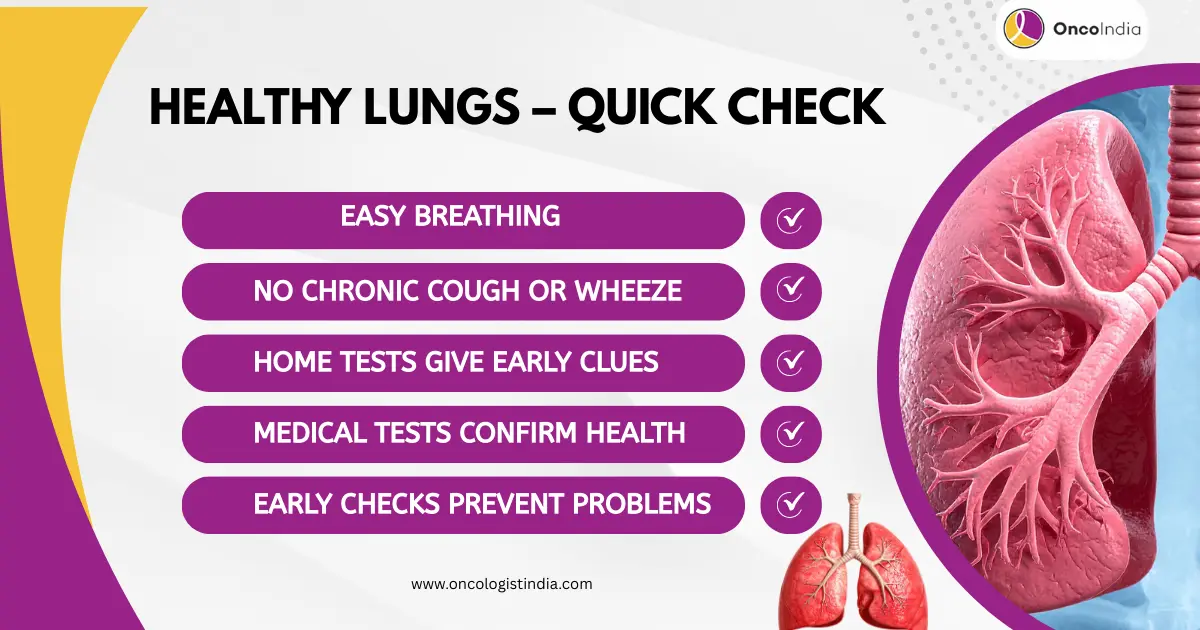
Lungs, one of our most vital organs… but most of the time we don’t really think about it. They just do their job quietly, we breath in, we breath out and our life goes on. It is only when our breathing gets a bit heavier, shorter or uncomfortable- we suddenly become aware of them.
The truth is, lung health affects far more than just breathing, healthy lungs help keep your energy levels up, support your heart, and allow your body to function the way it should. When lung functions are disturbed even slightly, people often notice fatigue, poor tolerance to exercise, or a general feeling that something isn’t right.
What makes lung diseases tricky is that many of them don’t start loudly. Conditions like asthma, COPD, chronic infections, or even lung cancer can develop slowly. Early signs are often brushed aside as “low fitness,” “age,” or just stress. Knowing how to check your lung health — even in simple ways
— can help you catch problems before they become serious.

What Healthy Lungs Usually Feel Like
With a healthy lung, breathing feels effortless and natural, you don’t notice it nor think about it. There isn’t any tightness in the chest, no noise while breathing and no urge to take deep breaths just to feel satisfied.
Most adults breathe somewhere between 12 and 20 times per minute, this isn’t something that needs to be counted every day. At rest, it should feel calm and steady, but if yours feels fast, shallow or uncomfortable without clear reason, this is something you need to get checked out.
With healthy lungs, you should be able to walk, climb stairs, or do daily chores without feeling unusually short of breath. Feeling tired after heavy exertion is normal, struggling after minimal effort isn’t.
Chronic coughing, frequent wheezing, or a whistling sound when you breathe are not signs of healthy lungs. Occasional coughing during a cold is fine, but symptoms that linger for weeks usually point to airway irritation or narrowing.
Simple Checks You Can Do at Home
Now you might think, you need fancy equipment to get a basic idea of how your lungs are doing, this isn’t the case, some simple checks can give useful clues.
One common tool is a peak flow meter. It’s a small handheld device. You take a deep breath and blow into it as hard as you can. The number it shows reflects how well air moves through your airways. Many people with asthma use it regularly. Consistently low readings, or readings that suddenly drop, can suggest airflow problems.
An easier method is the exhalation test, which is quite simple, take a deep breath and slowly breathe out while counting the seconds. Most healthy adults can exhale steadily for around 10 to 11 seconds, much shorter time than this may indicate reduced lung capacity or restriction.
Then we have the stair test which is very practical. Try climbing two flights of stairs at a normal pace, mild breathlessness is expected and quite normal, but if you feel extreme shortness of breath, chest discomfort, or need a long time to recover, it may suggest your lungs aren’t handling exertion that well.
You can also observe your breath control. After a normal inhale, try holding your breath comfortably and count how long you can do so without difficulty. This tells us more about breathing efficiency rather than lung size. Over time, patterns matter more than exact numbers.
Now don’t get me wrong, these checks don’t replace medical tests, but they can tell you whe something feels different from your usual baseline. It is always advisable to get checked by a doctor.
Medical Tests That Give Clear Answers
If your symptoms aren’t going away, doctors usually rely on a set of specialized lung function tests to figure out exactly what’s happening beneath the surface.
- Spirometry: This is the most frequent starting point. It’s a straightforward test where you blow into a tube to measure how much air you can exhale and how quickly you can do it. It’s the primary way doctors pinpoint issues like asthma or COPD.
- Body Plethysmography: This one is a bit more involved. You sit inside an airtight chamber (similar to a small telephone booth) so the doctor can measure your total lung volume. This helps identify “restrictive” lung diseases where the lungs simply can’t expand to their full capacity.
- Diffusion Capacity Tests: This test isn’t about how much air you can hold, but how well your lungs actually function. It tracks how efficiently oxygen moves from your lung air sacs into your bloodstream—a vital check if there is a concern about scarring or tissue damage.
- Pulse Oximetry: You’ve likely seen this one; it’s just a small clip that goes on your finger. It uses light to check your blood oxygen saturation. If your levels are low, especially when you’re feeling short of breathe, it’s a clear sign your lungs aren’t doing their job properly.
- Chest X-rays or CT Scans: Sometimes, doctors need to see the physical structure of the lungs. These scans can reveal things a breathing test might miss, such as fluid build up, infections, or abnormal growths.
Early Warning Signs You Should Take Seriously
Your body is usually pretty good at sending out smoke signals when something is wrong. Here are the symptoms you really shouldn’t ignore:
A cough that lingers for more than eight weeks is no longer just a “cold”—it needs a professional look. It could be anything from chronic bronchitis to a lingering infection. Similarly, if you find yourself winded during everyday tasks that used to be easy, your body is telling you something has changed.
Keep an eye out for constant mucus production, wheezing, or that heavy “tight chest” feeling. These are classic signs of airway inflammation. More urgent red flags include a bluish tint on your lips or fingernails, which suggests an immediate lack of oxygen, or coughing up blood. Even a tiny amount of blood is enough reason to head to a clinic immediately.
How to Protect Your Lung Health
While we can’t control everything, there are a few heavy-hitting habits that make a massive difference in your respiratory longevity.
First and foremost, ditching the cigarettes and vapes is the single best move you can make. The toxins in smoke actively break down lung tissue over time. Beyond that, staying active—whether through walking, swimming, or biking—helps keep your breathing muscles conditioned and your endurance high.
Simple lifestyle tweaks matter, too. Drinking plenty of water keeps the mucus in your airways thin and easier to clear, which lowers your infection risk. At home, try to keep the air clean by reducing dust and avoiding indoor smoke. You can even practice basic breathing exercises to strengthen your diaphragm and improve how air moves through your system.
When to See a Doctor
It’s time to call the doctor if you’re dealing with a persistent cough, wheezing, or chest tightness that just won’t quit. You should never delay a visit if your symptoms suddenly get worse, if you notice unexplained weight loss, or if you feel a level of fatigue that rest just doesn’t fix.
Final Thoughts
Lung issues rarely happen overnight; they tend to simmer quietly in the background. By paying attention to these early whispers and getting checked out when something feels “off,” you can prevent minor issues from becoming permanent damage. Your lungs are the engine for everything you do—if the breathing doesn’t feel right, trust your gut and get some clarity.
Leave a Reply