
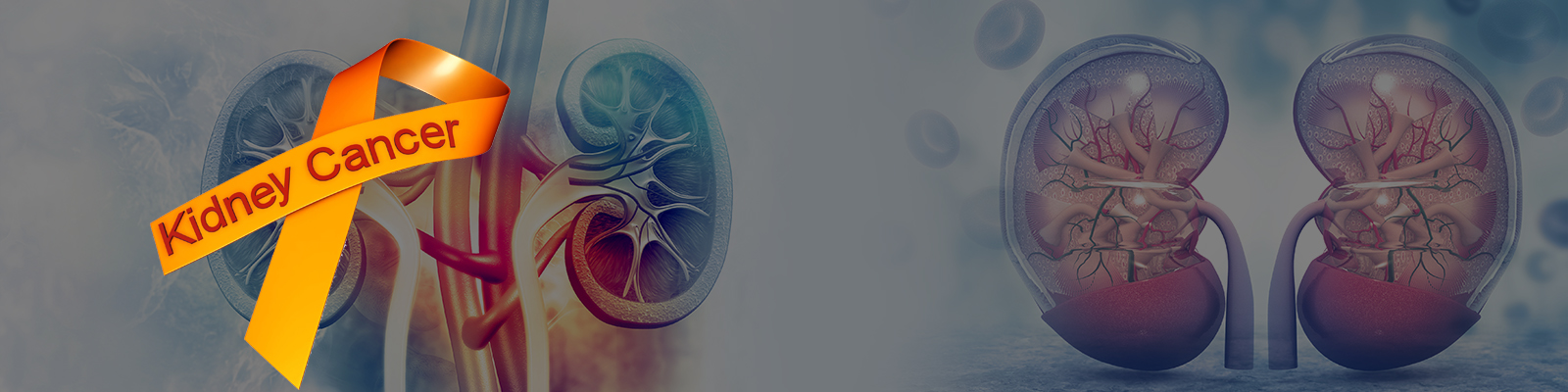
Kidney cancer or renal cancer is a disease in which the cells in the kidney become cancerous and grow out of control, this results in the formation of tumor. Most of the kidney cancers originate in the renal tubules of the kidney. Cancer can metastasize from the other parts of the body to the kidney .

Symptoms
There will be no signs or symptoms in the early stage, as the tumour grows the patient may have one or more of the following symptoms:
- Haematuria- Blood in urine
- A lump or mass in the abdomen, near the kidney lumbar region
- A continuous pain in the side, near the kidneys
- Swelling in the ankles or legs
- Weight loss that occurs for no known reasons
- Fever that lasts for a week, which is not caused by cold or infection
- Loss of appetite
- Extreme fatigue
Causes and Risk factors
Cancers originate when there is a change in the structure of DNA in the cells. These genetic mutations cause an uncontrollable growth of cells which results in a tumour. These tumours normally grow as a single mass, but sometimes more than one tumour may grow in one kidney or a tumour may grow in both the kidneys.
There are some risk factors also, that increases the risk of developing renal cancer. Some of them are:
- Smoking
- Obesity
- Hypertension
- Family History of Kidney Caner
- Using certain medications for a long time
- Being on long-term dialysis or having advanced kidney disease
- Having certain genetic conditions like von Hippel-Lindau (VHL) and inherited papillary renal cell carcinoma
- Being exposed to some chemicals like cadmium, asbestos, benzene
Diagnosis of Kidney Cancer
During the diagnosis, the doctor will check your abdomen and side for lumps, and also check for high blood pressure. In order to confirm the diagnosis the doctor may ask to do the following tests:
- Urine test for checking blood and other symptoms of cancer cells presence in urine.
- Blood test to find out the kidneys are working well or not.
- Ultrasound: Uses sound waves to get the picture of the kidneys. It also helps to find, if a tumour is solid or fluid-filled.
- CT scan: which make use of X-ray and a computer to get a series and detailed picture of the kidney.
- Intravenous Pyelogram (IVP): This involves X raying of the kidney after injecting a dye that travels to the urinary tract and helps in highlighting the tumours.
- MRI: This uses strong magnetic and radio waves to create a detailed image of soft tissues inside the kidney.
Treatment for Kidney Cancer
Once you are diagnosed with kidney cancer, your oncologist may suggest the following treatment options:
- Radical Nephrectomy
- Open Radical Nephrectomy
- Laproscopic Radical Nephrectomy
- Simple Nephrectomy
- Partial Nephrectomy(Nephron Spacing Surgery)
- Cryotherapy
- Radiofrequency Ablation
- Arterial Embolization
- Biologic therapy
- Targeted therapy
- Radiation therapy
- Chemotherapy
Dr. Shivakumar Uppala who has trained and practised extensively in surgical oncology provides the best treatment for kidney cancer in Trust in Hospital, where he works as an oncology consultant.


